ServicesDrying and Dehumidifying
Drying and Dehumidifying in Dumbarton
Once the standing water is gone, the water you can't see is still in your drywall, flooring and framing. We dry it out with professional equipment, measure progress every day, and keep you told what's happening in your home and how much longer it should take.
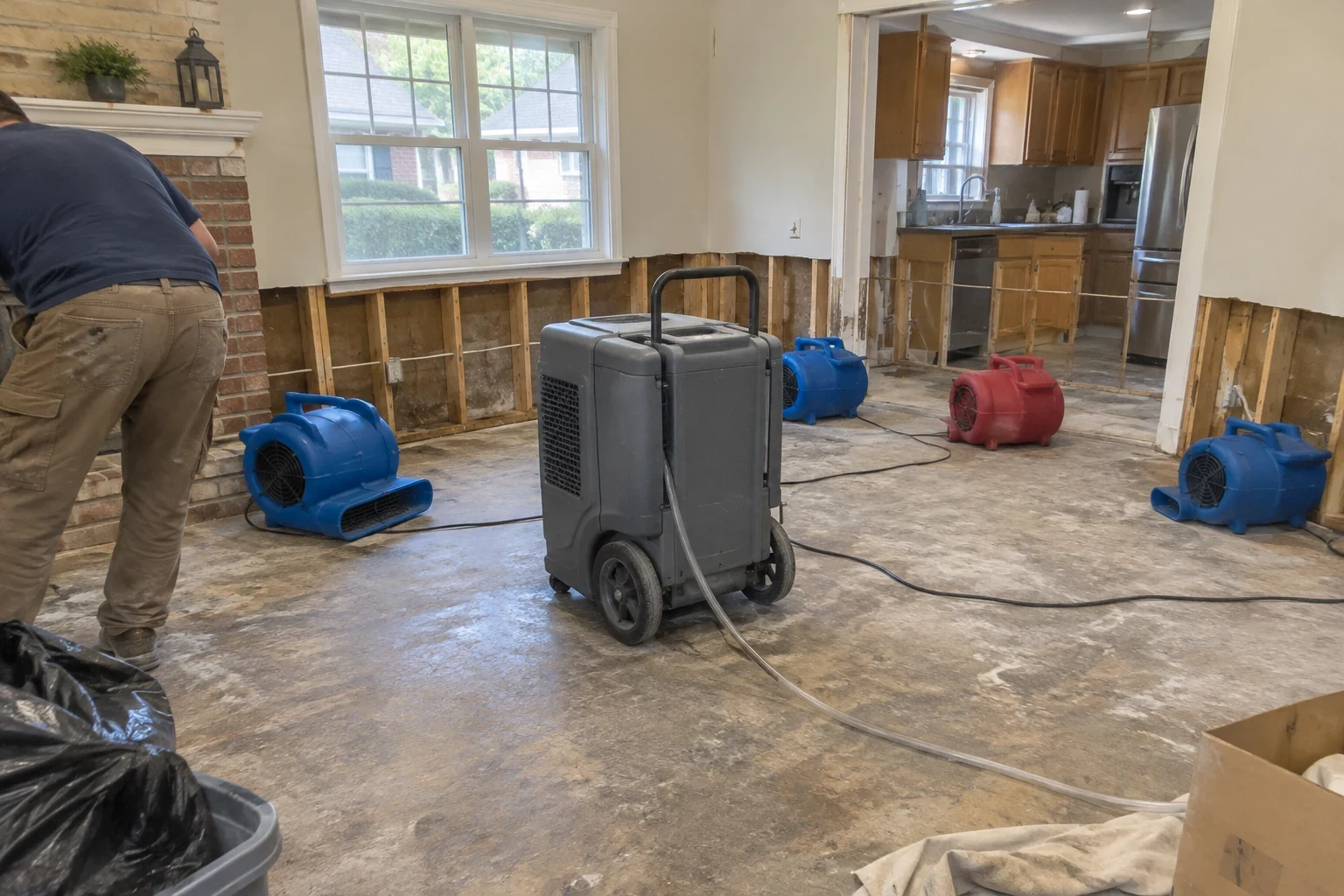
Getting the hidden water out
Drying and dehumidifying is the step after water extraction. A vacuum pulls up the pooled water, but wet materials keep holding moisture for days. Drywall wicks water upward, carpet pad stays soaked, and the subfloor under it can stay damp long after the surface feels fine.
We pair air movers, which push air across wet surfaces so moisture evaporates, with dehumidifiers that pull that moisture out of the room. Virginia's humid summers make this harder, because damp outdoor air keeps feeding the problem if the house is left open. A controlled setup indoors is what actually brings materials back to normal.
The goal is simple: dry materials before mold has a chance to start, and keep as much of your drywall, trim and flooring as we can so the repairs stay smaller.
What you get with our drying service
Tracing where the water went
Before any equipment goes in, we check floors and walls with moisture meters and thermal imaging to see how far the water spread. We show you the wet spots room by room, so you know exactly what we're drying and why.
Air movers and dehumidifiers
Each unit goes where the readings call for it, matched to the room size and how much water is involved. We keep cords tucked away from the paths you use.
Drying inside the walls
If water is trapped in a wall cavity, we may pull the baseboard or drill a few small holes near the floor to let air in. That step often lets us keep the wall rather than tear it out.
Daily moisture checks
We return to take new readings, shift or remove equipment, and let you know how near each area is to dry.
Care for your floors and furniture
We cover the floors along our routes through your home, lift furniture onto blocks or move it away from the wet area, and tidy up before we leave each time.
Records for your insurance claim
Every reading is dated and paired with photos. That gives your adjuster a clear record of how the drying was handled.
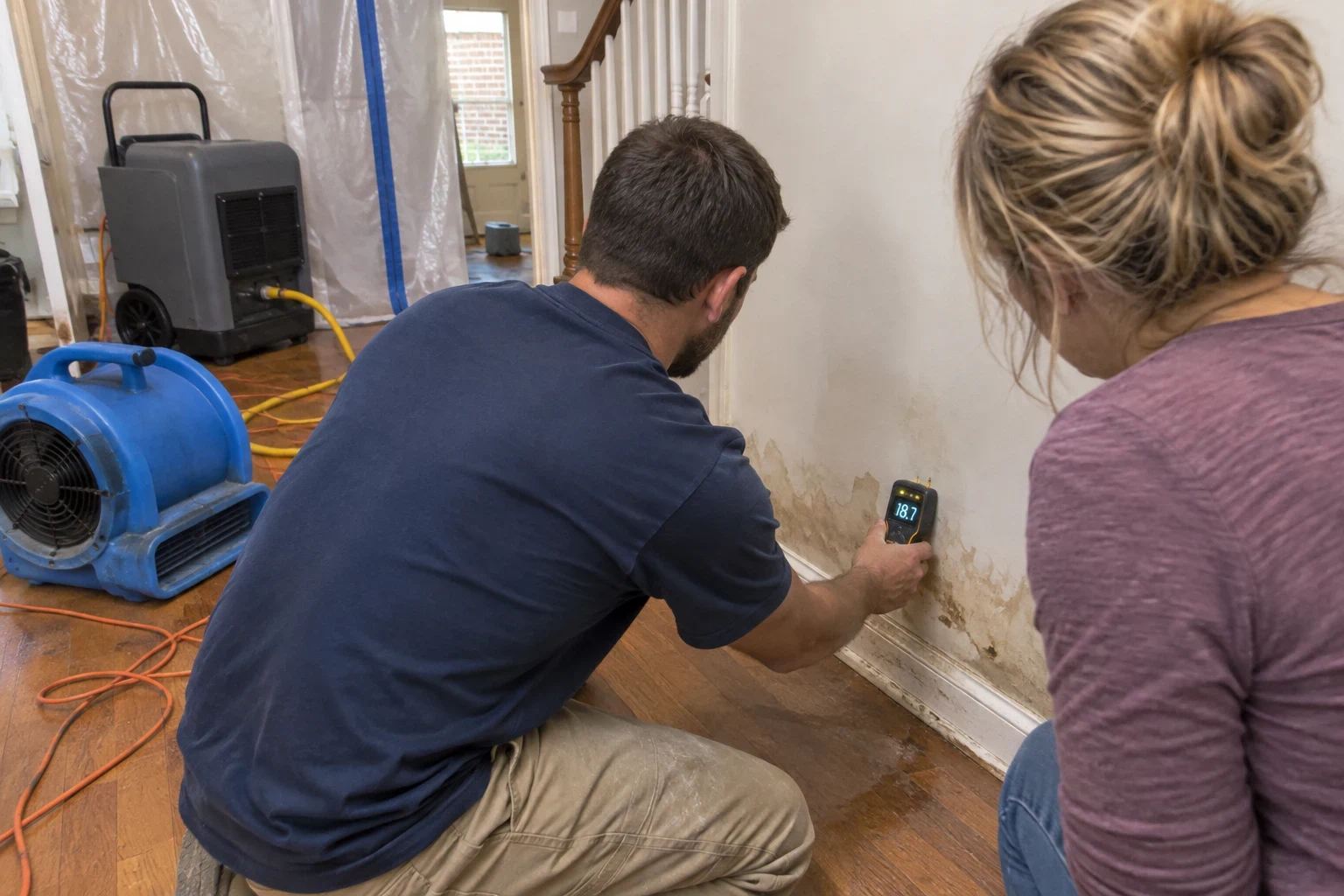
Signs your home needs professional drying
- Carpet that feels damp days later
- If the carpet or pad still feels cool or damp after a leak, the moisture is likely sitting underneath it.
- Musty smell that won't clear
- A stale, earthy odor usually means something is still wet. Left alone, it can lead to mold.
- Swelling, cupping or bubbling
- Hardwood that cups, laminate that lifts at the seams, or paint that bubbles all point to trapped moisture.
- Soft or stained drywall
- A tide line on the wall or drywall that gives when pressed means water wicked up into it.
- Damp crawl space or basement
- Lingering humidity below the house feeds moisture into the floor system above.
How a drying job runs
- 1
Inspection and readings
We walk through with you, take moisture readings, and explain what's wet and what isn't. The inspection is free.
- 2
Prep and protection
We protect floors along our paths, move or block up furniture, and remove only what can't be dried, such as soaked carpet pad. We tell you before anything comes out.
- 3
Equipment setup
Air movers and dehumidifiers go in, and we may vent wall cavities. We show you which outlets we're using and how to reach us if a breaker trips.
- 4
Daily checks and adjustments
Each visit we record readings, move equipment as areas dry, and give you an honest timeline update.
- 5
Final readings and pickup
When materials reach normal moisture levels, we remove the equipment, clean up, and walk you through the results. If repairs are needed, our repairs and rebuild work can take it from there.
What affects the cost of drying
The price of drying comes down to how much of your home is wet, what those materials are and how many days the equipment has to run. During the free inspection we walk you through the plan and each thing that drives the cost, so the final bill matches what you were told. We work with most major insurance companies, and we're happy to show you how drying is typically recorded for a claim.
- How much of the house is wet
- One damp hallway might need only a couple of units. When water spreads across several rooms or runs down into the basement, the setup grows, and each added area means more machines running.
- What the wet materials are
- Carpet and drywall give up moisture fairly quickly. Hardwood, plaster and thick subfloor hold on to it, so they add days to the job.
- Time before drying started
- A leak caught within hours stays near the surface. Water that sat for a day or two travels deeper into framing and flooring, and that takes longer to pull back out.
- Spaces that are hard to reach
- Water inside wall cavities, under cabinets or in a crawl space may need venting or a special setup to dry properly.
Drying and dehumidifying questions
- How long does drying usually take?
- A lot of homes are dry in roughly three to five days. The real answer depends on what got wet and how soon drying began, and dense materials like hardwood or plaster often need extra time. Because we take readings at every visit, you'll always know how close each room is.
- Can we stay in the house while the equipment runs?
- In most cases, yes. You'll hear a constant hum and the rooms will feel a little warmer, and we route cords so they're not in your way. If any area isn't safe to use, we'll say so directly.
- Why not just open the windows and run fans?
- Household fans stir the air but don't take the water out of it, and muggy outdoor air can actually slow things down. You also have no way to know when the subfloor or the inside of a wall is truly dry without a meter, and those hidden spots are where mold usually gets its start.
- Will the equipment run up my electric bill?
- Yes, some, because it runs day and night. We only set up what the readings justify and pull units out as rooms dry. Hold on to your power bill, since many policies take that added cost into account.
- How fast can you get here?
- Our promise is on site in 60 mins or less. Emergency water damage calls are answered at any hour, including nights and weekends. Starting the drying early gives your flooring and drywall a much better chance of being saved.
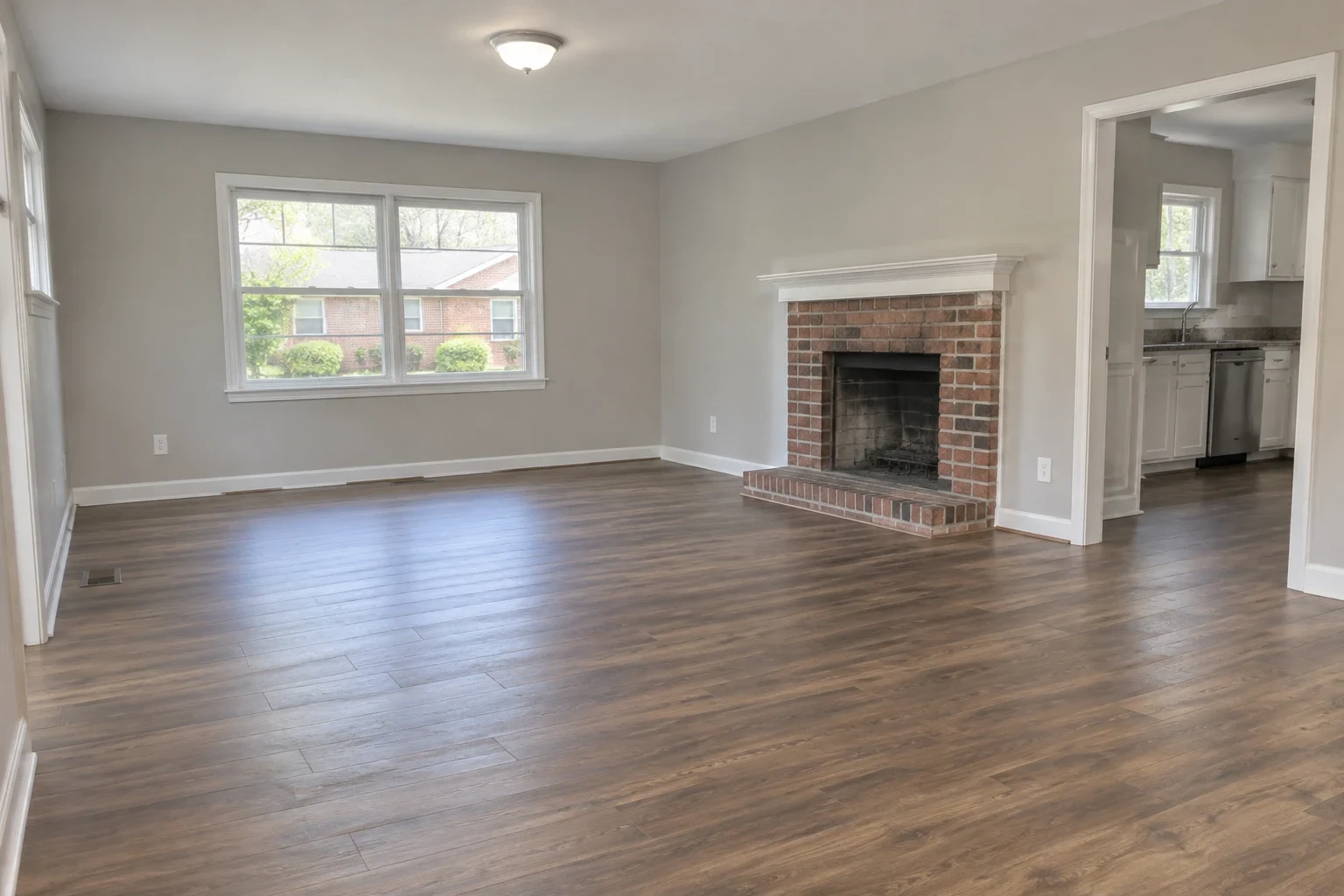
Let's get your home dry
We'll come out, measure the moisture and explain what it will take, with your floors protected from the first step. We serve Dumbarton and nearby areas including Lakeside, Glen Allen and Richmond.