ServicesMold Remediation
Mold Remediation in Dumbarton
Mold usually means water has been somewhere it shouldn't for a while. We find the source, seal off the affected area so spores stay put, and remove the growth while keeping the rest of your home covered and clean. You'll know the plan before any work starts.
What mold remediation actually fixes
Mold needs moisture, and it will keep coming back as long as that moisture does. So our work starts with the cause: a slow leak behind a vanity, a wet crawl space, a roof drip into the attic, or carpet that never fully dried after a spill. Cleaning the spot you can see without fixing what feeds it only buys a few weeks.
Remediation means containing the area, removing materials mold has grown into, cleaning the surfaces that can be saved and drying everything to normal levels. Humid Virginia summers keep indoor moisture high, so we also look at airflow and dehumidification so the problem doesn't return.
Throughout the job we tell you what we found, what we plan to remove and why. Nothing comes out of your walls without you hearing about it first.
What's part of every mold job
Finding the moisture source
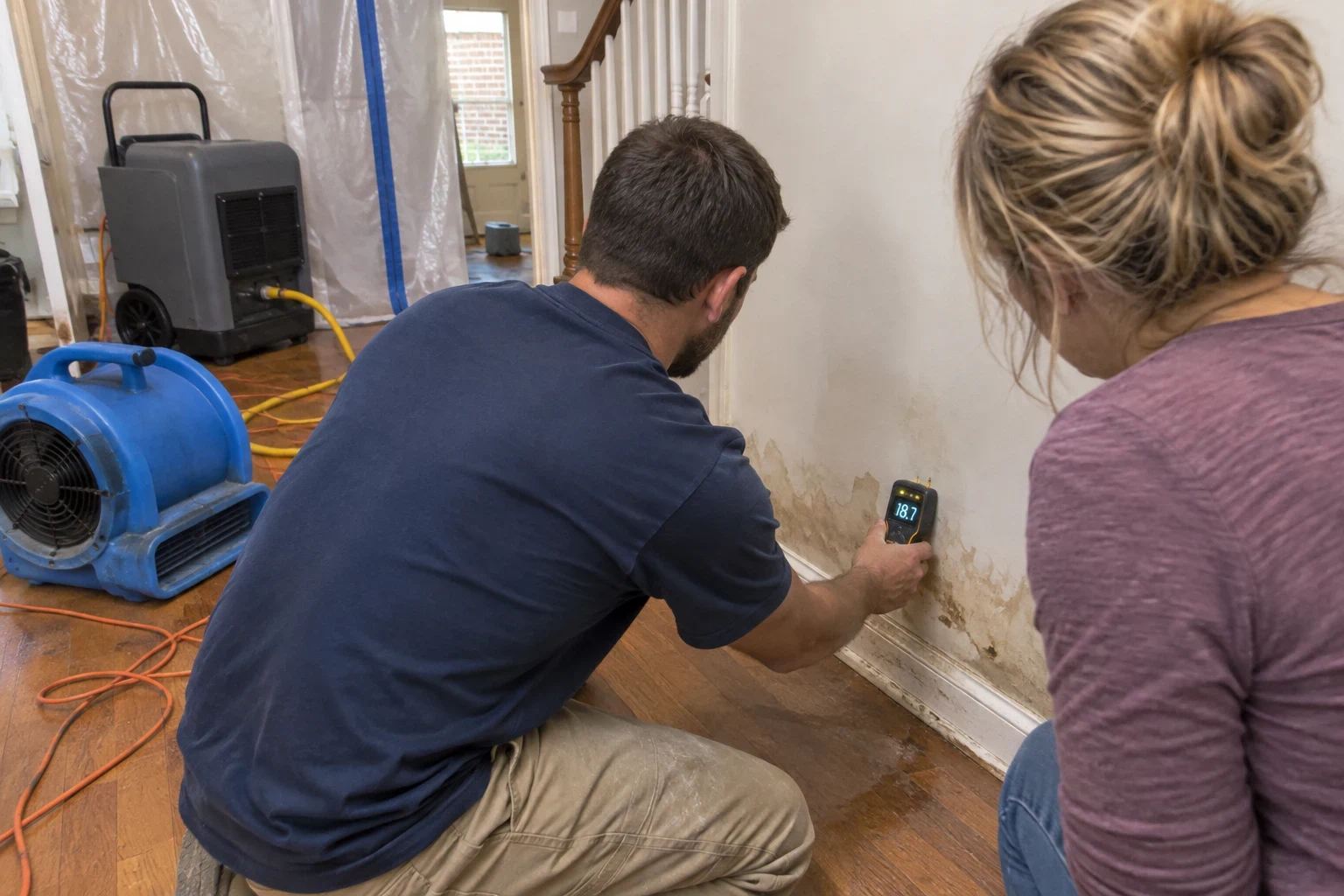
Before anything gets cut out, we take moisture meter readings and check nearby plumbing, walls and flooring to trace where the water comes from. When the fix belongs to a plumber or roofer, we say so plainly.
Sealed work area
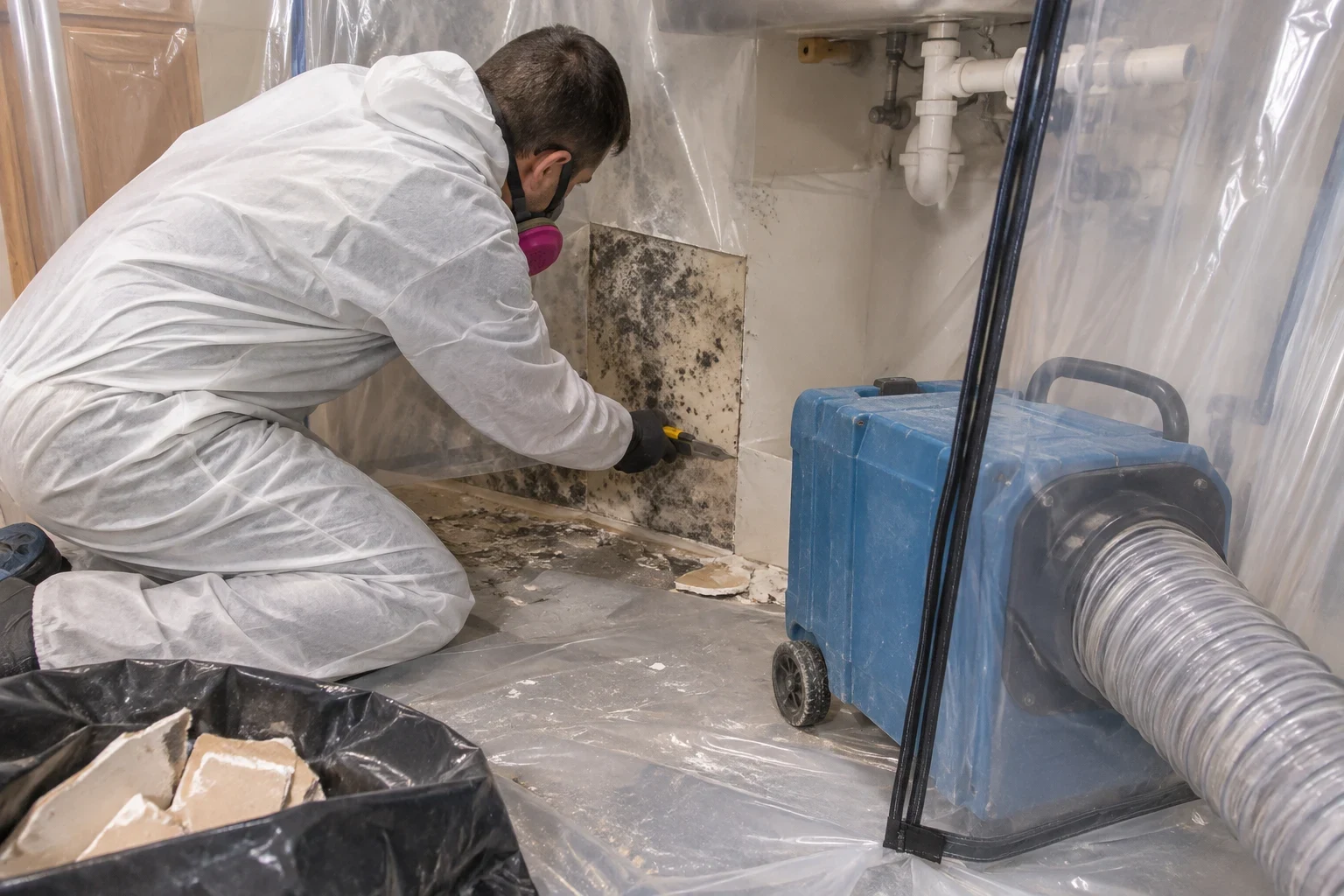
We hang plastic sheeting around the affected space and run HEPA air scrubbers to hold it under negative pressure. Spores stay inside the work zone instead of drifting toward bedrooms and living areas.
Covered floors and clear flower beds
Runners go down from your entry door to the work area, and debris bags are never set on shrubs or garden beds outside. We aim to leave your floors exactly as we found them.
Taking out what can't be saved
Moldy drywall, insulation, carpet pad and trim are removed and sealed in bags while still inside containment. Only what truly has to go comes out, and we take pictures along the way so you're never guessing about what was behind the wall.
Cleaning, treatment and drying
Studs, subfloor and other solid surfaces get a HEPA vacuum, a scrub and an antimicrobial treatment. Then we dry the space with the same equipment used in our drying and dehumidifying work.
When to have us check for mold
- A stale, earthy odor
- If a closet, basement or bathroom keeps smelling musty no matter how much you air it out, growth may be hiding behind drywall or under the flooring.
- Speckling on walls or ceilings
- Black, green or gray dots near windows, supply vents or above the shower mean moisture has been lingering on that surface.
- An old leak that was only mopped up
- When an overflow or leak was wiped dry but the wall cavity and carpet pad never got properly dried, mold can take hold within a couple of days.
- Paint, drywall or wood changing shape
- Blistered paint, drywall that feels soft, cupping in hardwood or a stained subfloor are all clues that water keeps finding its way in.
- Damp spaces you rarely visit
- Sweating ductwork, soggy insulation and dark patches on attic sheathing or crawl space joists are where growth often begins unnoticed.
From first visit to final check
- 1
Inspection at no charge
Our first visit covers the problem area, moisture readings and the most likely source. We explain what we see and what we'd suggest, and the decision about next steps stays with you.
- 2
Covering floors and sealing off
Floor protection goes down along our route, plastic barriers go up and the air scrubbers start running. Before we get going, we let you know which rooms to stay out of and roughly how long.
- 3
Removal, cleaning and treatment
Damaged materials come out and are bagged within the sealed area, and what remains is cleaned and treated. Sealed bags travel out along the covered path, never through your main living space.
- 4
Drying and a walkthrough together
Once moisture readings are back to normal, we show you the finished area before the containment comes down. When drywall or flooring needs replacing, our repairs and rebuild crew takes it from there.
What shapes the price of mold remediation
We price mold work only after seeing it in person, because what shows on the surface is often just the edge of it. During the inspection we walk you through the scope and what's driving the number, all before any work starts.
- How much area is involved
- A spot under the kitchen sink and a full finished basement wall are very different jobs. Larger areas need more containment, more removal and more drying time.
- Which materials are affected
- Solid wood framing can usually be cleaned in place. Drywall, insulation and carpet pad soak mold in and generally need to come out and be replaced.
- How hard it is to reach
- Working in a low crawl space, a hot attic or behind built-in cabinetry is slower, more careful work than an open room with clear floor space.
- Stopping the moisture
- When an active leak or ongoing high humidity fed the growth, fixing that becomes part of the job and can widen the scope.
Common mold remediation questions
- Is bleach enough to get rid of mold myself?
- On a small spot on tile or another hard surface, careful cleaning may do it. Bleach can't soak into drywall or wood to reach the growth underneath, and scrubbing can send spores into the air. For anything bigger than a small patch, or mold that smells musty or keeps returning, we're glad to take a look.
- Does homeowners insurance pay for mold removal?
- Coverage usually depends on what caused it. Policies more often cover mold that follows a sudden event, like a burst pipe, than mold from long-term humidity or gradual seepage. We work with most major insurance companies. We'll document what we found and explain it clearly, while the coverage decision stays with your adjuster.
- Will my family have to move out while you work?
- Most of the time, no. With containment and air scrubbers in place, the work area stays separated, and people simply stay out of the sealed rooms. If anyone in your home has asthma or other breathing concerns, we'll talk that through before we begin.
- How many days does mold remediation take?
- A small, contained area can often be finished in a day or two. Bigger jobs that involve removal and drying usually run several days, and you'll get a realistic timeline from us after the inspection.
- What if water is still coming in right now?
- Reach out for our emergency water damage response. We're on site in 60 mins or less. Getting the water stopped fast is what keeps today's leak from becoming next month's mold.
Find out what's behind that smell
We'll come out, find the moisture source and explain exactly what needs to happen, with your floors covered while we're there. We serve Dumbarton and nearby areas including Lakeside, Glen Allen and Tuckahoe.